
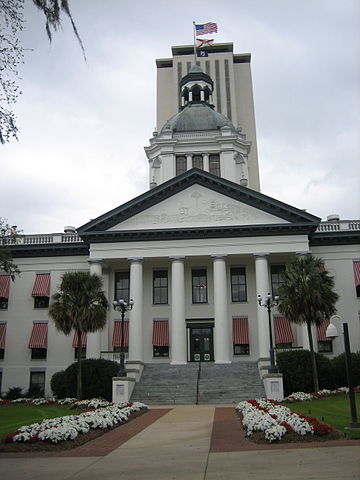
 The advent of term limits helped to change the culture of state legislators in 1990’s. Previously many regardless of ideology worked hard to build a party that competed in elections and had a few guiding principles but was largely a big tent operation.
Term limits being implemented coincided with the collapse of the Democratic Party as a major force in the political landscape of Florida. Was it a coincidence? Somewhat, but not completely. State legislators on the Democratic side of the aisle even many progressive ones have also become more interested in creating personal political fiefdoms in recent years. This also relates to term limits as we will discuss.
When Florida voters passed term limits in 1992, the Democrats were in charge of the Florida House enjoying a nice margin in the lower chamber. The 71-49 Democratic advantage had been shaved from a 30-seat advantage before the controversial 1992 reapportionment process when the Justice Department’s interpretation of the Voting Rights Act led to a proliferation of minority-access seats.
Eight year terms limits meant that every Florida House seat would be open at some point between 1994 and 2000. This would disproportionately favor Republicans. But in the Senate, the Democrats had lost 12 seats over four election cycles, and the upper chamber was deadlocked 20-20 after the 1992 elections. This meant that term limits would impact both parties similarly in the Senate, though the two longest-serving members of the body were Democrats from North Florida, Pat Thomas and W.D. Childers (who would switch parties in 1995).
The infrastructure of the Florida Democratic Party was collapsing in the 1990’s ironically just as Democrats were becoming consistently competitive at the Presidential level in the state for the first time in decades. During the 1980’s Florida had been the most Republican southern state in all three Presidential elections, yet the Democrats at the same time had hit its highest numbers in the State Legislature since before the Civil Rights era. This came after a highly favorable and largely partisan 1982 reapportionment which coincided with a landslide reelection for very popular Governor Bob Graham.
The collapse of the FDP infrastructure, term limits kicking in and the loss of 35 State House seats in the ten years between 1994 and 2004 led to a generation of newly elected members that were almost completely independent of the party. The reduction of Democrats in lean periods like 2004-2006, 2010-2012 and now 2014-2016 reduced the membership of the House and Senate caucuses to little beyond safe seats, largely from southeastern Florida or the urban core of big cities in the rest of the state.
While prior to 2000 those members that represented safe seats often were important parts of helping the party raise money and build on the grassroots level, the dynamic in Tallahassee in the new era has changed the equation. Today, Tallahassee is dominated by entrenched lobbyists that represent corporate interests and an aligned Republican Party that has had total control of state government for 16 years. On this playing field, Democratic legislators have little incentive to help build and grow the Democratic Party.
Despite the efforts of many FDP staffers and chairs, the legislature continues to have many members even from very liberal areas that would rather promote themselves in the need to chase future offices than help build the party. This has also led to greater accommodation with the Republican leadership and corporate aligned lobby corps.
Office shopping and self-promotion has grown among Democrats and even many of those perceived as progressives have meddled in local politics and made shotgun alliances with Republicans. This has directly led to a culture developing among Democratic lawmakers that discounts the importance of building and maintaining a strong Florida Democratic Party. In some cases, legislators have even gone to great lengths to weaken the party and its impact on legislative races.
Legislators in the term limits era often feel they have limited time to either shop for another office, or to create political influence and relationships with lobbyists and insiders that will serve them well when they leave office. This has led to am proliferation of deal cutting, political committees associated with legislators and the use of “non-partisan” local elections as a cover to back conservative Republicans for political or economic reasons.
All of this has contributed to the undermining of the Florida Democratic Party. While the party has made countless mistakes throughout the years, the now-entrenched culture among many legislators to discount the importance of the party and to push a personal agenda has not helped. While term limits are not entirely to blame, it certainly has not helped.




 The Florida Squeeze
The demise of the Florida Democrat Party is also attributed to the absense of quality candidates. In the 8th Congressional District. there was the major problem in the candidacy of Corry Westbrook who attempted to be the first legal resident of Washington, D. C. to obtain a Florida Voter Registration Card on February 8, 2013. A year long criminal investigation conducted by the Florida Department of Law Enforcement resulted in the recommendation that she be arrested and prosecuted for voter fraud. As a result, the credibility of the Democrat Party in Central Florida was destroyed.
LikeLike
Thank you Johnny one note
LikeLike
Really good article. I used to hate this site as being reactionary anti-FDP but I now see your logic in many of these posts.
This one in particular is really good.
LikeLike
Excellent post. Now talk about the vendor and consultant driven corruption of the party PLEASE!
LikeLike
Great post as usual Kartik.
Palm Beach County is the worst for this.
Ron KIein was interested in building the party but others like Rob Wexler and Dave Aronberg simply promoted themselves or political operatives that they were associated with.
Now things are worse than ever with the Senate twins Joe Abruzzo and Jeff Clemens both behaving like kingmakers and whose machinations are undermining the party and creating divisions.
These guys and others have created a network of political committees and associated entities that play in local races in lieu of the party and even back Republicans!
Broward your home territory is not much better but you have already outlined that in an excellent piece so I don’t need to get into the likes of Lori Parrish or consultants like Judy Stern.
Keep up the good work! You are making a difference Kartik!
LikeLike
Thank you for identifying the Rob Wexler situation. It is important to remember that he lost his political clout once it was revealed that he was not a Florida resident as he had falsely claimed.
LikeLike
Excellent piece. You are nailing it time and again now.
The PCs are a big problem imho. legislators creating their own private personal parties for all intents and purposes.
LikeLike
I know you know this but the readers might not – so many seats the democrats lost in that ten year period were north of Ocala and the party has made no attempt to win them back since.
LikeLike
Really smart analysis.
The legislators have become more selfish and more interested in becoming players in the Tallahassee circuit than anything else.
LikeLike
Spot on
The legislators own selfishness in this term limits era has hurt the party greatly.
LikeLike