
This is an excerpt from Florida and the British prior to the American Revolution
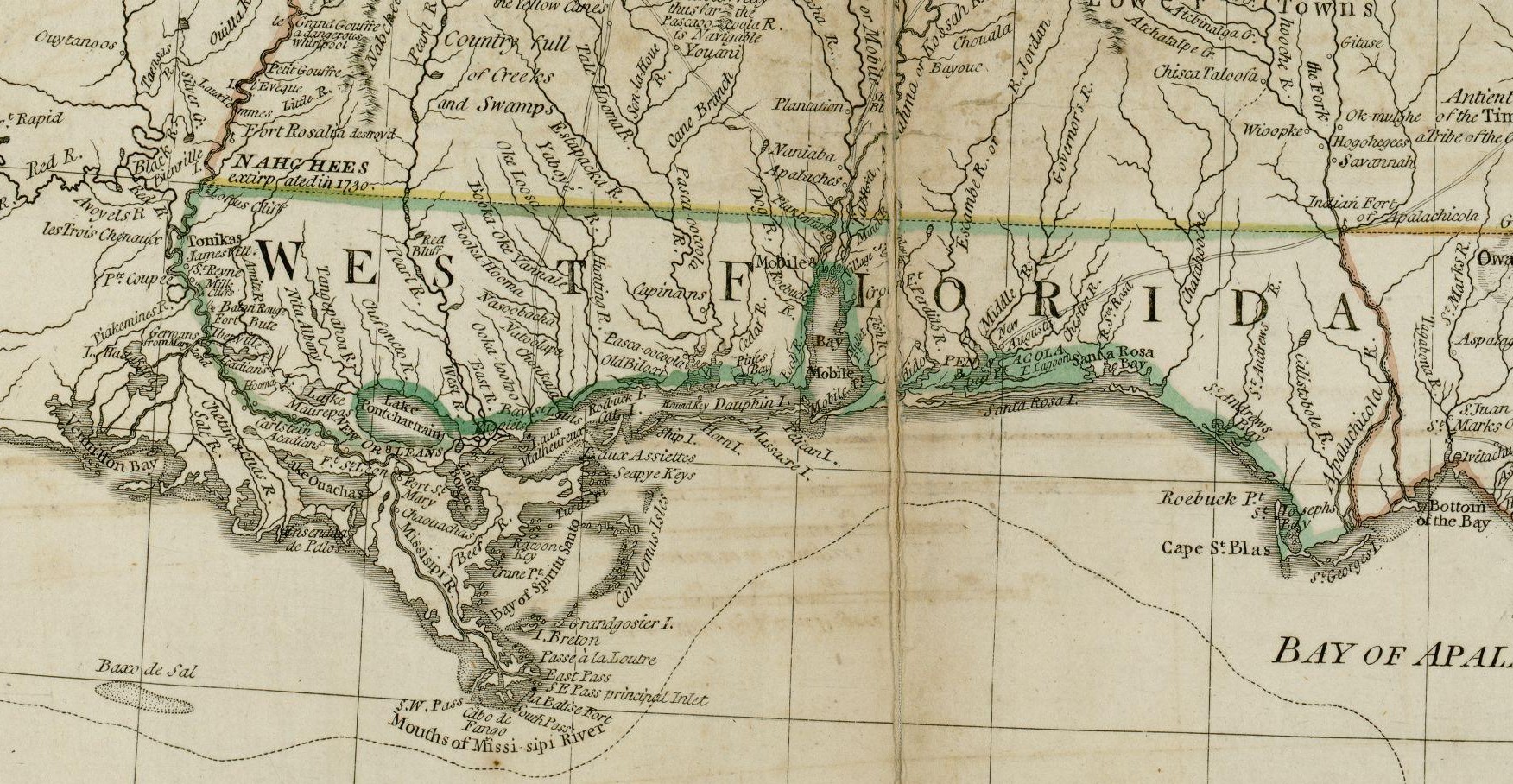
As noted in the last section Spain ceded Florida to the British in 1763. At the same time, in a separate agreement French Louisiana was split in two – the area west of the Mississippi River became Spanish Louisiana. The areas between the Mississippi and Perdido Rivers were ceded to Britain and made part of Florida. The British decided that the territory encompassing Florida was too large to govern as a single unit and split the colony into East and West Florida – the dividing line between the two colonies was the Apalachicola River, which today serves as the division between the Eastern and Central time zones. When the British moved into Florida, plans for a long period of colonization began. After nearly 60 years of conflict, Britain’s now enlarged North American colonies could look forward to peace and prosperity. Or so it was thought at the time. The next twenty years of Florida history were tightly intertwined with those of the “thirteen colonies” to the north. The British colonial empire as we have seen always impacted Florida’s governance and security under Spanish rule. However, the integration of Florida into the British colonial system and the desire of George III’s government to develop Florida into more than just a military outpost was to create increasing tension with neighbors to the north. It was also destined to tie Florida’s long-term future to those British North American colonies, though that was far from evident in 1763. Florida had been largely militarized since Queen Anne’s War and the attempts to further colonize the state and grow its economy had long since ceased. As we have previously seen, Florida’s population in the early 1600’s was higher than in the mid 1700’s and the wide swath of area previously inhabited by natives or Spanish colonists had been reduced to two coastal outposts 400 miles apart. By the time the Spanish left Florida, under 4,000 people lived in the colony as compared to roughly 60,000 in 1650. The British began very aggressive incentives to attract settlers to both East and West Florida. In 1764, the Colony of West Florida was enlarged, taking in areas to the north, between the Chattahoochee and Yazoo Rivers. These areas, unlike the rest of the former French possessions west of the Thirteen Colonies, were opened to white settlement. The Proclamation of 1763 had set aside former French territories west of the Appalachian Mountains and east of the Mississippi River as designated areas for Native Americans, angering the colonists of British North America. The British now held 33 colonies between Hudson Bay and Grenada. East Florida in particular was strategically critical to the British defense system. Positioned between the North American colonies and Britain’s rich Caribbean ones, East Florida was destined in the days before the American Revolution to be a critical cog in the defense system of both North America and the Caribbean. All future white settlement in British North America beginning in 1764 was planned to be focused around Florida and Canada. The Proclamation of 1763 made it illegal for white settlers to penetrate west of the Appalachians, effectively forcing future settlement either into Canada to the north or Florida to the south.




Will FLORIDA AND THE BRITISH PRIOR TO THE AMERICAN REVOLUTION ever be available from my Library?
Sarah
Sarah Jones 44 Woodfield Dr. Port Orange, FL 32129 386-290-2653 sjsji@mac.com
>
LikeLike