
The structure and history of the U.S. and Russia complicates their relations. Russia is a hierarchical society that stresses power and conformity. The U.S. is a diverse society that legally protects individual rights and freedom.
In the U.S. government power was divided horizontally between the executive, legislative and judicial branches. Vertically, governmental power is shared between national, state and local levels. This decentralization of national power has given individuals substantial autonomy to be creative, prosperous and free. In the West and especially in the U.S. the status of the individual continues to climb. Each citizen is given a vote, a voice and a right to petition the government.
The U.S. is considered individualist and competition is encouraged. Increasing one’s economic and social standing through individual effort is considered virtuous. The Western political ethos is nurtured by the sentiments of anthropologist Margaret Mead: “Never underestimate the power of a small group of committed people to change the world. In fact, it is the only thing that ever has.”
In the East in general, and Russia in particular, the collective has supremacy over the individual. Unity is valued over competition. Individual rights, which could dilute the collective will, are deprioritized.
Power has been concentrated in the Tsar, General Secretary or President. It is not shared through religious independence or distributed by geography. This top-down hierarchy has been evident in history and is pervasive throughout Russian society. Political progress is rarely accomplished by group movements, as demonstrated by the Old Believers and Decemberists.
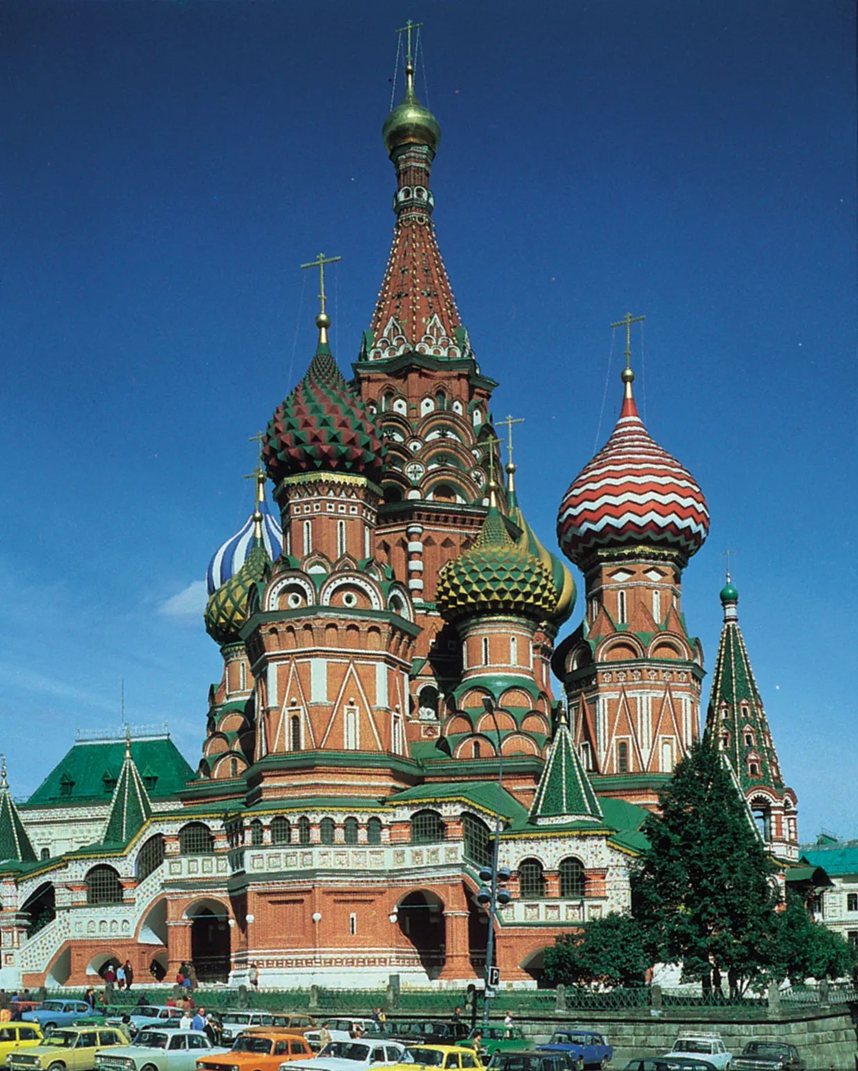
Vladimir Putin likely sees himself the protector of a distinct Slavic-Orthodox civilization and is determined to restore Russia’s imperial status.
Background
Eastern Orthodox Christianity split with Roman Catholicism in 1054 during the Great Schism. Catholicism was the dominant faith in Western Europe while Eastern Orthodox Christianity stretched from Athens to Moscow. In addition to the religious differences, Western and Eastern Europe spoke different languages and used different alphabets.
The rule of law in Western Europe was originated by the Catholic Church. Pope Gregory VII initiated the separation between church and state and the church integrated Roman law from Byzantine Emperor Justinian’s Corpus Juris Civilis. As European countries adopted dispute resolution bodies many followed the bureaucratic organization of, and transferred statutes from, the Catholic Church.
Western Christianity was decentralizing as it evolved. In the 1200s Thomas Aquinas explained how Christian faith was accessible through logic and reason. The advent of Protestantism and the rise of Martin Luther was a larger evolutionary leap. He wrote of salvation, “(F)aith alone makes someone just and fulfills the law.” Through a direct relationship with God, the individual no longer depended on the church leadership for salvation.
Up until the 1500s Bibles and church services in Western Europe were in Latin. Most of those who spoke, and nearly all those who could read, Latin were leaders of the Catholic Church. Luther reversed this by publishing the Bible in German. The Gutenberg printing press and the use of national languages combined to spread both literacy and Protestantism.
Up From Serfdom
The Magna Carta of the 1200s made the English King accountable to the law. The English Parliament passed the Declaration of Rights in 1689, which included a right to a jury trial, elections and free speech. Constitutionalism was emerging which emphasized equality before the law. In the
West the individual was moving up in the pecking order as the government was more accountable and no longer dominated religion.
Western Europe was economically decentralizing as well. During the Mercantile Age national governments directed resources to maximize exports and minimize imports. Colonization accelerated as countries sought to control more arable land and precious metals.
This was replaced by the market-based economy of Adam Smith’s Wealth of Nations. The state’s political power waned as entrepreneurs created private businesses in Europe and the U.S. The emerging Industrial Age created more options for workers and consumers.
East v. West
During the Crusades soldiers sent from Western Europe to retake Jerusalem from the Muslims, instead redirected their attention to Constantinople. They burned much of the and city carved out personal fiefdoms in the heart of Eastern Europe. This left Eastern Europe with sense of betrayal.
The Mongols invaded and dominated Russia between 1240 to the 1480. Mongol rule overturned legal progress made by adopting Roman and Byzantine institutions. When control returned to Russian leaders, Mongol practices remained. Peasants were conscripted into the military for life and there was no rule of law to protect the nobility from central government coercion.
After the Ottomans conquered Constantinople the leadership of the Orthodox church was assumed by Russia. The country experienced a number of attacks from Western Europe. Invasions from Sweden, France and Germany led Russians to believe their traditions were under siege.
Stagnation
Eastern Orthodox Christianity rejected the logic and reason employed by Aquinas in Western Europe. It emphasized a more spiritual and experience-based approach to religion. God is beyond human definition or man-made vocabulary. In contrast to Protestantism, this meant parishioners were more dependent on the Church leadership to guide their salvation.
This Hesychast spirituality contrasted with Catholic Scholasticism. The practice of Theosis, or sharing energy with God, was more important than academic writing or credentials. Slavic philosophers and Russian nationalists rejected Western economic and religious doctrines. Aleksey Khomyakov believed the West was undermining unity and promoting individualism through capitalism and Scholasticism.
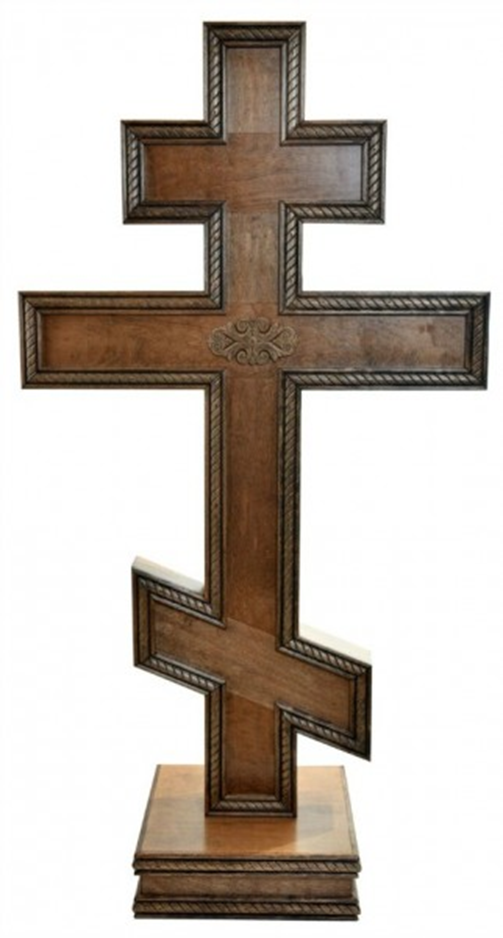
Aleksandr Solzhenitsyn, Ivan Ilyin and Alexander Dugin share this negative view of the West. Dugin has written that, “Man is anything but an individual.” He believes the most important thing about an individual is that they are part of a larger whole; a civilization or society. Dugin contends individualism undermines “collective identity.”
Dugin rationalizes his anti-abortion, anti-homosexual, anti-Western beliefs as pro-family Eastern Orthodox values. This ideology fits Vladimir Putin’s plans. An expanding Russia needs more military aged men to guard its massive borders and invade its neighbors.
Russian nationalism has kept Putin popular as the economy has suffered. In the Eastern point of view, Russia is coherent and robust when it is unified and singular. Strength is drawn from the government, the economy and religion acting as one — each institution singing in harmony.
Today
After Communism failed in Russia, experiments with liberal democracy and economic competition led to bankruptcy and collapse. Russians aspired for the stability Vladimir Putin appeared to represent. Eventually, higher revenues for exports of oil and gas improved standards of living and restored national pride.
During Putin’s rule, the control of the Russian economy returned to the central government. Disloyal oligarchs were given Stalin-esque show trials and foreign investors assets were expropriated. Russia is in the bottom third of all countries for ease of doing business, economic freedom and the rule of law. It’s ranked below Nicaragua, Bangladesh and Nigeria for economic freedom.
As oligarchs have consumed more of the nation’s wealth and commodity prices declined, the economy has stagnated for a majority of Russians. Nationalism has been enhanced by invading Georgia and Ukraine and amplified by Putin’s utterances including the 2023 Foreign Policy Concept. Simultaneously Putin has prioritized the growth of the Orthodox Church.
The Russian state reaffirmed its domination over religion multiple times. The Russian government and Eastern Orthodox church are top-down organizations do not inspire freedom, liberty or the rule of law.
Western notions of competition, diversity and consumerism are seen as disorganized and decadent. In the U.S. citizens draw strength from the Latin phrase, “E pluribus unum” meaning “out of many, one.” Economic competition within and between countries has led to higher standards of living. An adversarial legal system appears more likely to achieve justice. Ideological competition plays out in the marketplace of ideas and religious pluralism gives citizens wider options for salvation.
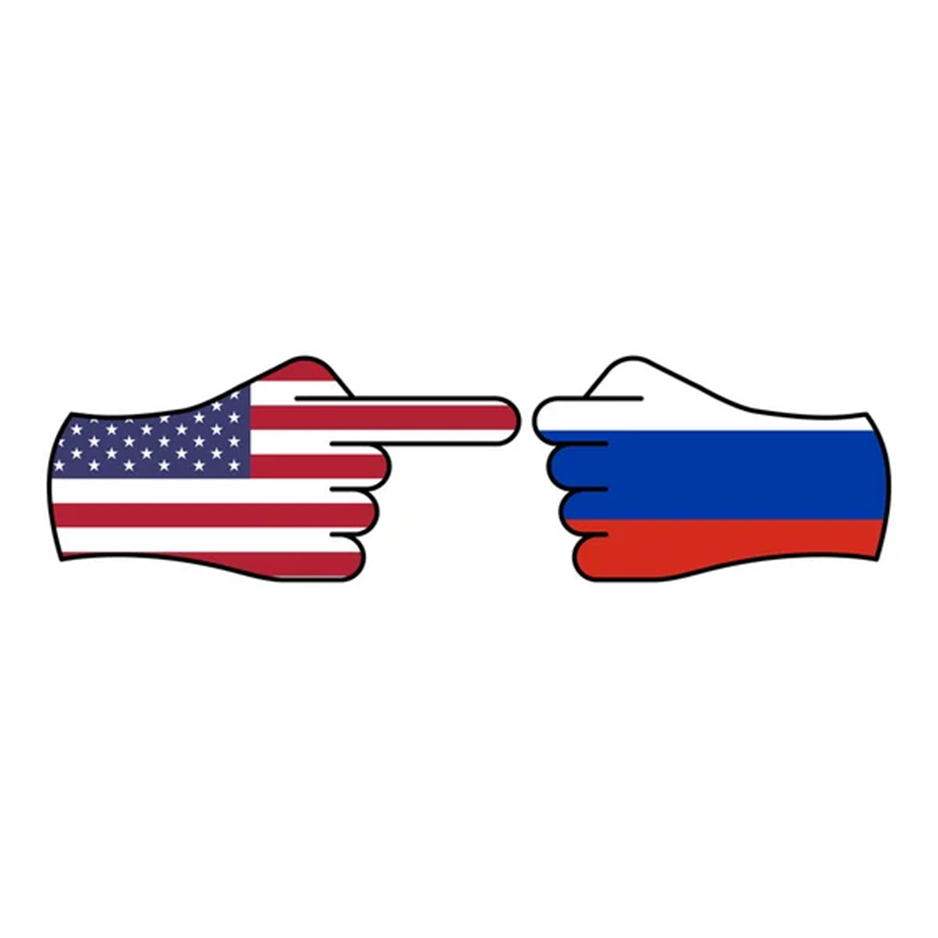
Economically, legally, and politically Russian society is similar to life under the Tsars. Commercial freedom is nonexistent, the church moves at the direction of the central government and the rule of law is nowhere to be found.
Outlook
While the adoption of Communism made the US and Russia ideological adversaries, history made Eastern Europe and the West rivals. From Russia, the Enlightenment looked like the West abandoned God for the new religion of science. Russian nationalists like Solzhenitsyn believed the West had sacrificed God and Christian morality for material comforts and the law.
In Russia a ‘competitor’ is sometimes considered an enemy, while those who act with independence or autonomy are marginalized. These beliefs were reflected in the writings of Ilyin, who stressed the need for a strict social hierarchy.
In the West, Putin is viewed as an individual acting on his own terms. He is psychologically profiled based on his youth with a personality shaped by the KGB.
He likely sees himself as a product of a larger whole; a protector of the Slavic-Orthodox civilization. The growth of NATO and possible EU membership for Ukraine clearly upset Putin’s top-down view of Slavic and Orthodox identity. Putin believes the West is trying to deny Russia’s civilizational destiny. As such he may believe his actions are not his own but the duty-bound reactions of a trustee to the Slavic-Orthodox civilization.
The development of the political, legal and economic systems in the U.S. and Russia has created profoundly different histories, expectations and outlooks. While military action in Ukraine will keep relations on ice for the foreseeable future, an eventual rapprochement will require both sides to consider these differences and how they can be worked through.




 The Florida Squeeze